


Beware of Humidity and Mold During the Rainy Season!
The rainy season has finally arrived. As humid and damp days continue, the effects are not limited to our health—they can also have a significant impact on buildings and the equipment in factories and offices.During this season, special attention must be paid to the occurrence of mold and corrosion (rust) caused by humidity.
In this article, we explain the risks of equipment trouble hidden in the rainy season, the measures you can take immediately, and what to do if damage has already spread.
The Threat of Mold and Corrosion Caused by Rainy Season Humidity
High humidity during the rainy season gradually damages buildings and precision equipment in ways that are often not visible.
- Mold Growth:
Mold can develop not only on walls, ceilings, and floors, but also inside air conditioners, electrical wiring, and equipment circuit boards. If left untreated, it can cause unpleasant odors, health issues, and even equipment malfunctions. - Metal Corrosion (Rust):
Moisture accelerates the oxidation of metal components. Precision equipment, production facilities, and factory machinery are particularly at risk, as internal circuit boards and wiring can corrode due to humidity—potentially leading to sudden short circuits or complete failure.
Just like damage caused by fire heat or soot, damage caused by water (moisture) becomes increasingly difficult to restore over time.
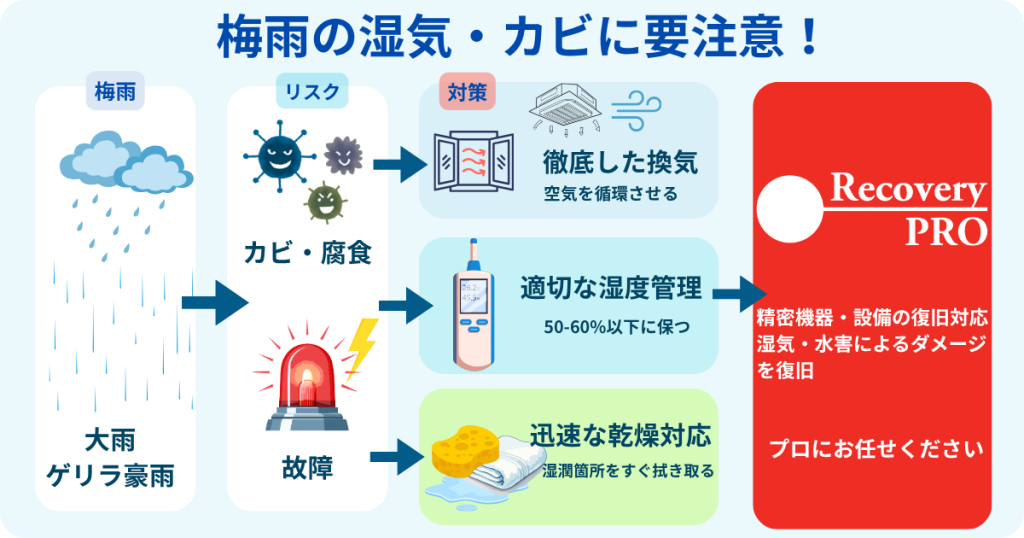
Three Essential Measures You Can Take Now: Humidity Control, Ventilation, and Drying
To minimize rainy season damage, it is essential to apply preventive measures in daily operations and to quickly identify and address damp areas.
1. Thorough Ventilation : Areas where air tends to stagnate (such as warehouses, basements, and server rooms) are especially prone to mold. Open windows regularly and use circulators or ventilation fans to maintain proper airflow.
2. Humidity Control (Dehumidification)
Ideally, keep the humidity in rooms with equipment at 50–60% or lower. Make full use of dehumidifiers to prevent excessive humidity.
3. Immediate Drying of Damp Areas
If you find condensation, leaks, or water intrusion, immediately wipe away moisture and dry the area completely. Even a few days of neglect can lead to rapid mold growth and corrosion.
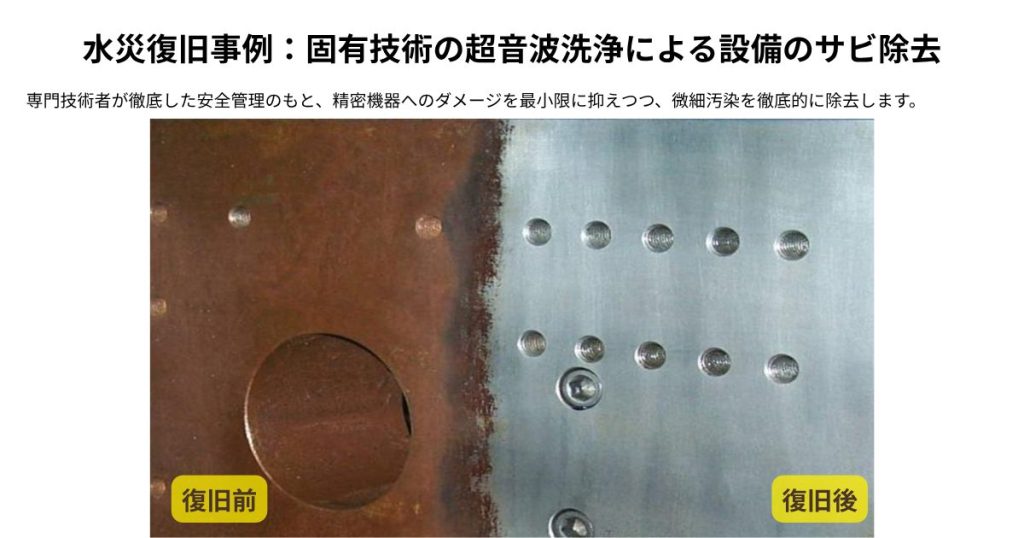
If Damage Has Already Spread… Leave It to Recovery Professionals!
No matter how careful you are, some issues—such as leaks or hidden mold and corrosion inside floors, walls, or precision equipment—can be difficult to prevent entirely. Before assuming it’s too late or giving up on malfunctioning equipment, consult Recovery Pro, disaster restoration specialists.
Leveraging advanced technologies developed through fire and water damage recovery, Recovery Pro provides the following specialized services:
- Restoration of Precision Equipment and Circuit Boards:
Using specialized cleaning and drying techniques, we restore equipment damaged by moisture, water, or mold. - Full-Space Decontamination and Drying:
We thoroughly disinfect, deodorize, and dry offices, factories, and warehouses affected by mold, using professional equipment—helping restore operations quickly.
Summary
Speed is critical when dealing with humidity during the rainy season.
By focusing on humidity control, ventilation, and prompt drying, you can protect your valuable equipment and business operations.
If the damage exceeds what you can handle in-house, or if you need safe and reliable equipment restoration, please feel free to contact Recovery Pro. We will respond promptly and support the recovery of your valuable assets.もし、
About Recovery Pro Connect:
We deliver newsletters and disaster recovery case studies to help you prepare for emergencies!
![[Measures Against Electrical Equipment Fires] Overload Risks Caused by Extreme Summer Heat and Key Points for Rapid Recovery](https://recoverypro.jp/wp-content/uploads/sites/3/2026/08/Blog2_Aug2026-500x263.jpg)
![[Measures Against Electrical Equipment Fires] Overload Risks Caused by Extreme Summer Heat and Key Points for Rapid Recovery](https://recoverypro.jp/wp-content/uploads/sites/3/2026/07/復旧前-6-500x263.png)